


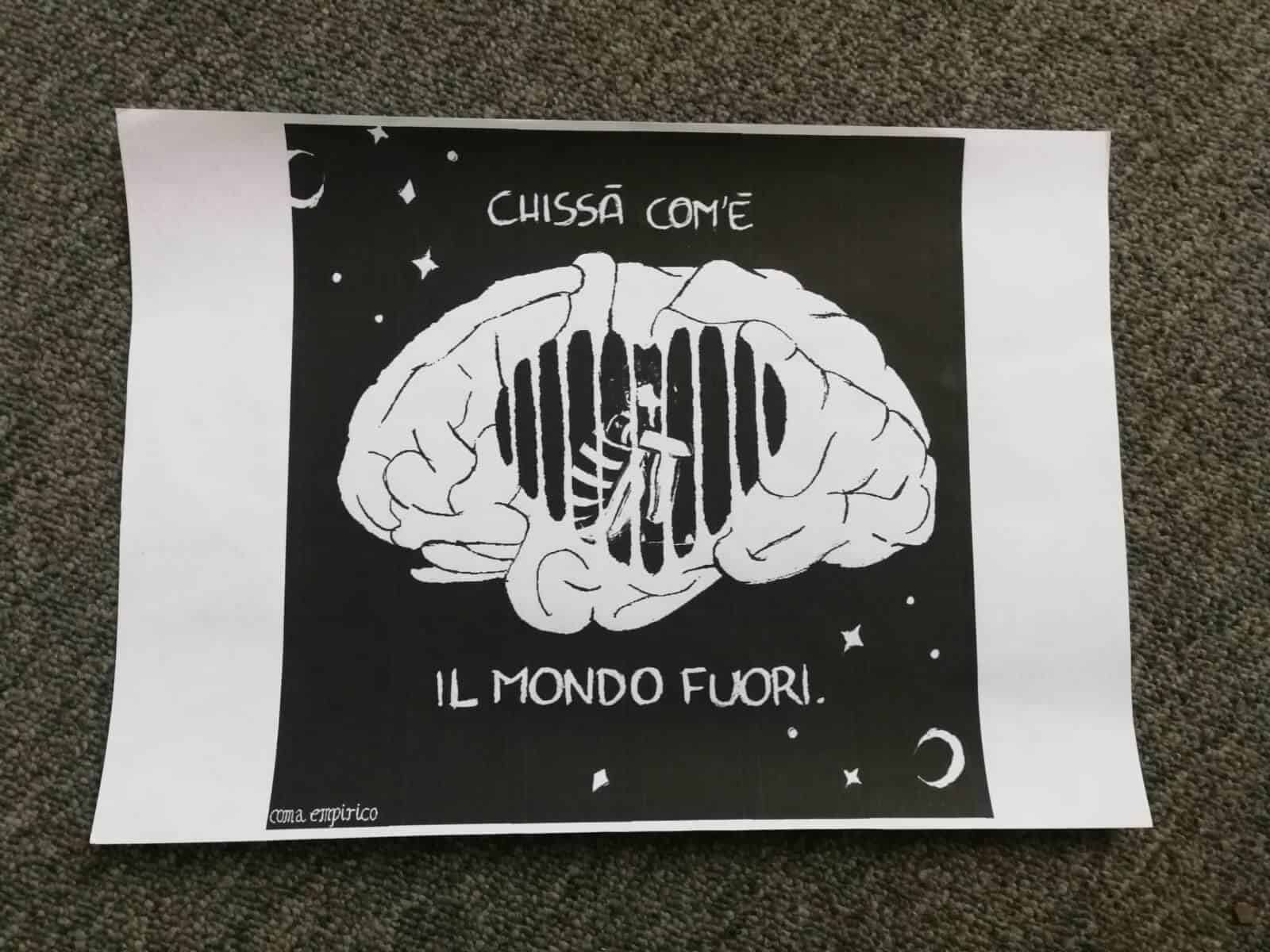
Ho chiesto a V. di portare delle immagini che parlavano del suo percorso di psicoterapia. Una domanda che quando ho conosciuto la giovane V. non aveva nemmeno ragione di esistere. Quando ho conosciuto V. Il pensiero di inadeguatezza rispetto a se stessa era talmente forte da averla indotta a rinunciare al mondo fuori, negandosi perfino l’interesse ad esplorarlo. Timidezza, vergogna, insicurezza, diffidenza e chiusura sono le parole chiave che meglio la descrivevano e che trovavano espressione in un corpo rigido, iperteso che si manifestava in un comportamento evitante e in un disturbo del dolore genito-pelvico e della penetrazione. IO: “Com’é il mondo fuori?” La psicoterapia serve a formulare domande che permettono di aprire porte, inizialmente nemmeno immaginabili. La psicoterapia aiuta la persona a riconoscere i propri “blocchi” ea scegliere consapevolmente come affrontarli, imparando a riconoscere i reali bisogni che si celano dietro i sintomi e le “bugie” che ci si racconta. Oggi V. si porta via la consapevolezza di aver imparato ad amarsi ed amare, permettendosi di vivere a pieno la sua vita con coraggio, fiducia e curiosità. Io mi emoziono sempre ad essere testimone oculare dei preziosi cambiamenti che nascono nella stanza di terapia e poi si trasformano in esperienze quotidiane nel mondo fuori. Io mi emoziono sempre ad assistere allo spettacolo meraviglioso di trasformazione, così come direbbe Perls (fondatore della psicoterapia della Gestalt), “di persone di carta in persone reali. Io mi emoziono sempre quando alla chiusura di un percorso, al momento dei saluti, le persone esprimono enorme gratitudine verso la relazione terapeutica, unico reale strumento di cambiamento. V. ha scelto di salutarmi, regalandomi una delle immagini che aveva scelto per parlare del nostro percorso. L’immagine rappresenta una scena del film “Will Hunting” (oltretutto uno dei miei film preferiti, ma V. non lo sapeva) in cui in primo piano c’è l’essenziale, ovvero lo spazio relazionale in cui V, come il protagonista del film, ha scelto di riscrivere il copione esistenziale della sua vita. Articoli consigliati https://www.martinafino.it/paura-amica-o-nemica/ https://www.martinafino.it/larte-di-amare-2/ https://www.martinafino.it/cose-che-cura-la-relazione/ https://www.martinafino.it/il-coraggio-di-credere-in-se-stessi/ https://www.martinafino.it/ti-sei-perso-nel-mondo-come-me/
La paura del mondo esterno nasce spesso da esperienze di insicurezza, giudizio o fallimento vissute in passato. La psicoterapia aiuta a riconoscere queste paure, comprenderne le origini e affrontarle gradualmente, sviluppando fiducia nelle proprie capacità e nel contatto con gli altri. Attraverso la relazione terapeutica, la persona impara a conoscersi, accettarsi e valorizzarsi. La psicoterapia aiuta a trasformare la critica interiore in consapevolezza e comprensione, favorendo una maggiore fiducia in sé e nel proprio modo di vivere. Sì, è del tutto normale. La psicoterapia tocca parti profonde del sé e può generare paura o resistenza. Questi momenti, se accolti con empatia e senza giudizio, diventano opportunità di crescita e trasformazione. Imparare ad amarsi significa riconoscere i propri bisogni, accettare le proprie fragilità e rispettare i propri limiti. Nella terapia, questo processo si costruisce passo dopo passo, imparando a prendersi cura di sé in modo autentico e non più attraverso il giudizio o l’autosvalutazione. La relazione terapeutica è il cuore del processo di guarigione. È uno spazio sicuro, basato sulla fiducia e sull’ascolto, dove la persona può sperimentare nuovi modi di essere e di relazionarsi. È proprio nella relazione che nasce la possibilità di cambiare e di riscrivere la propria storia.
LA STORIA DELLA GIOVANE V. CHE HA IMPARATO AD AMARSI E AD AMARE
Tra le tante immagini, sono rimasta estremamente colpita dal potere evocativo di una di queste.CHISSÀ COM’È IL MONDO FUORI?
IO: “Com’é il mondo fuori?”
V: “Non sono interessato al mondo fuori. Lo sento pericoloso e più grande di me”
Oggi a chiusura del nostro percorso ripercorriamo i passi fatti insieme e gli obiettivi terapeutici raggiunti. E per fare ciò, ripartiamo dalla stessa domanda che oggi ha tutta un’altra risposta.
V: “Può essere piacevole e spiacevole, ma non ho più così tanta paura ad affrontarlo al punto da convincermi di non esserne interessato.
Il mondo fuori mi interessa eccome e ti dirò di più…ora se non lo affronto ho addirittura l’impressione di aver sprecato un’opportunità di crescita”
Domande Frequenti (FAQ)
1. Perché alcune persone hanno paura del “mondo esterno”?
2. In che modo la psicoterapia può aiutare ad aumentare l’autostima?
3. È normale provare resistenza o paura durante un percorso di terapia?
4. Cosa significa “imparare ad amarsi” in psicoterapia?
5. Qual è il ruolo della relazione terapeutica nel cambiamento personale?

 Italian
  English (United States)
  English (UK)
  Chinese (China)
  Arabic
  Chinese (Taiwan)
  French
  German
  Russian
  Spanish
  Japanese
  Hindi
Hindi  Cantonese
  Afrikaans
  Albanian
  Chinese (Hong Kong)
  Czech
Czech  Danish
  Greek
Greek  Norwegian
  Romanian
  Turkish
  Tibetan