


Depression
Etymologically, the word "depression" derives from the Latin de-premo, which means to bring to a lower level. In fact, when we feel depressed, it's as if we lack sufficient pressure, or the drive needed to do the things we desire. In common parlance, we often use expressions like "I feel down,” “everything is black”, precisely to indicate this absence of vital energy.
Loss of energy, sleep disturbances, social withdrawal, lack of interests, decreased appetite and difficulty paying attention These are some of the main symptoms of depression. Everyone, at some point in their lives, has experienced one or more of these symptoms for some time.
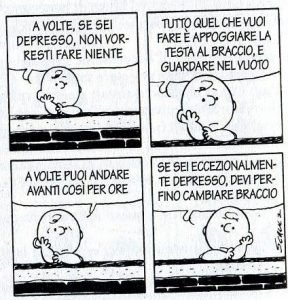
But what if depression doesn't go away and interferes with our lives? Psychotherapy can help in this case; it provides the depressed individual with: useful and therapeutic tools to see one's difficulties from a different perspective and to face them in a new way.
As?
– increasing self-esteem and sense of self-efficacy
– mobilizing lost energy
– rediscovering balance and psychophysical well-being
Depression makes the person a victim of a constant process of self-devaluation This prevents them from transforming their intentions into actions; it's as if they were inhabited by a very angry inner self that indiscriminately criticizes and devalues their every behavior, reminding them that they're not up to the challenges of everyday life.
An interesting video proposed by the WHO to raise awareness about depression illustrates very well how a depressed person experiences a day. Borrowing the metaphor used by Winston Churchill, the “black dog”, to describe his depressive periods, the video allows the viewer to see the world through the eyes of depression and to glimpse, through those same eyes, the possibility of overcoming it, precisely by communicating with it. Gestalt therapy helps the depressed person, through dialogue with their depression, to come to grips with their own limits and, starting from there, find a new intention to be in the world.
PROBLEMS TREATED


 Italian
  English (United States)
  English (UK)
  Chinese (China)
  Arabic
  Chinese (Taiwan)
  French
  German
  Russian
  Spanish
  Japanese
  Hindi
Hindi  Cantonese
  Afrikaans
  Albanian
  Chinese (Hong Kong)
  Czech
Czech  Danish
  Greek
Greek  Norwegian
  Romanian
  Turkish
  Tibetan